IoT SIM vs eSIM vs iSIM for Global Deployments
A decision-stage comparison of SIM, eSIM and iSIM for multi-country IoT fleets, mapping roaming rules, remote provisioning and lifecycle cost to real rollouts.
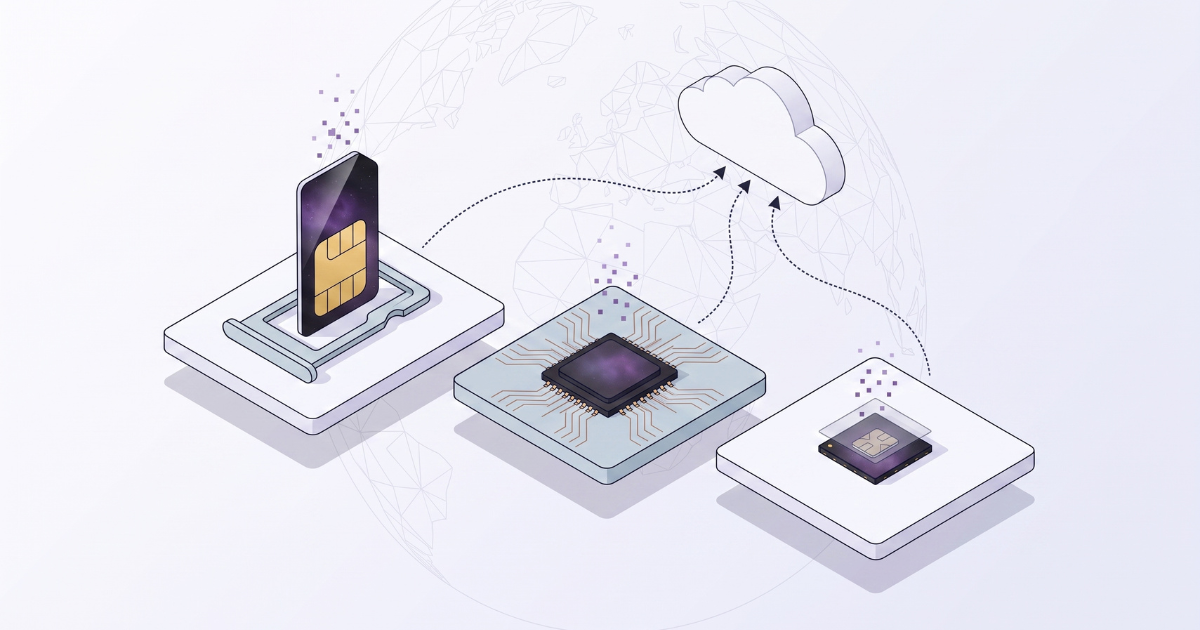
A decision-stage comparison of SIM, eSIM and iSIM for multi-country IoT fleets, mapping roaming rules, remote provisioning and lifecycle cost to real rollouts.
Filter articles
The layers of a modern IoT connectivity architecture, what each one owns, and where device identity, private routing, policy enforcement and monitoring belong.
Multi-IMSI reduces single carrier dependency for IoT fleets. How failover actually works, where it helps across borders, and what it does not fix.
IoT SIM, eSIM, iSIM and eUICC are not interchangeable. How to choose a SIM strategy for global IoT fleets, and what permanent roaming changes.
Provider portability decides whether you get to change IoT connectivity supplier. What locks fleets in, what SGP.32 changes, and how to test for it.
Zero Trust for devices that cannot run security software. How network level identity, least privilege access, and session enforcement protect IoT fleets.
VPNs break at IoT scale because most devices cannot run a client. A step by step path to Zero Trust connectivity for global device fleets.
Compare multi-carrier IoT monitoring platforms on data freshness, traffic visibility and API access. Most dashboards report a day late. Here is what to ask.
Permanent roaming restrictions create compliance risk for IoT fleets. How to design local connectivity using multi-IMSI, eUICC, and managed network control.