What is multi-IMSI failover in IoT connectivity
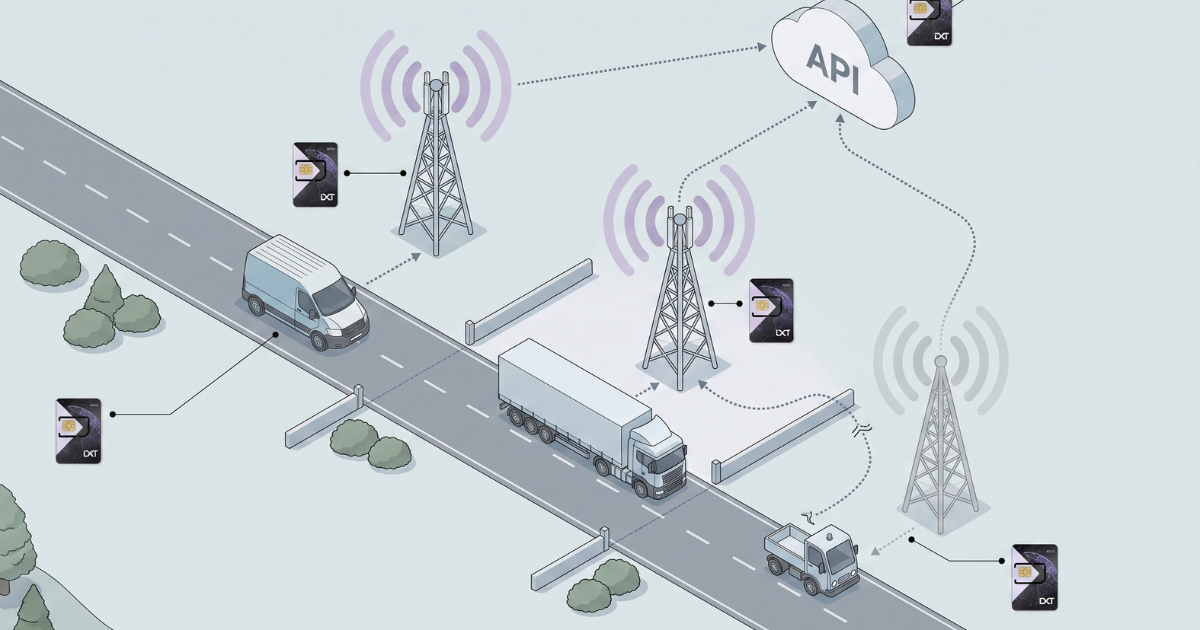
Multi-IMSI lets one SIM hold several operator identities and switch between them. How the switching logic works, and where it beats single network coverage.

Multi-IMSI lets one SIM hold several operator identities and switch between them. How the switching logic works, and where it beats single network coverage.
Filter articles
Roaming rules, local compliance and remote provisioning decide the SIM form factor, not the hardware. A buyer's comparison of SIM, eSIM and iSIM.
IoT SIM, eSIM or iSIM for a multi country deployment? Compare them on roaming rules, local compliance, remote provisioning and field replaceability.
Enterprise IoT SIM pricing looks clean until the invoice lands. Where the hidden fees come from, and what predictable per device pricing actually requires.
What NIS2 Article 21(2) asks of IoT and OT connectivity: segmentation, access control, visibility, resilience and audit trail, and who owns each part.
SIM, eSIM and iSIM compared for multi country IoT deployments, covering roaming compliance, remote provisioning and long term operational fit at fleet size.
A decision-stage comparison of SIM, eSIM and iSIM for multi-country IoT fleets, mapping roaming rules, remote provisioning and lifecycle cost to real rollouts.
Multi-IMSI reduces single carrier dependency for IoT fleets. How failover actually works, where it helps across borders, and what it does not fix.
IoT SIM, eSIM, iSIM and eUICC are not interchangeable. How to choose a SIM strategy for global IoT fleets, and what permanent roaming changes.