When multi-IMSI failover happens in IoT connectivity
Multi-IMSI failover is not constant. Here are the six moments a switch actually triggers, what it fixes, what it does not fix, and what to ask a provider.
A hundred devices drop off the network in one region on a Tuesday afternoon. Nothing changed on your side. No firmware push, no configuration change, no hardware fault. One carrier had a bad day, and your fleet was standing on it.
That is single carrier dependency, and it is the failure mode most IoT deployments discover in production rather than in design review.
An IMSI is the identity a SIM presents to a mobile network. One IMSI means one home operator and one set of roaming agreements. Every network your device reaches, it reaches through that operator's relationships.
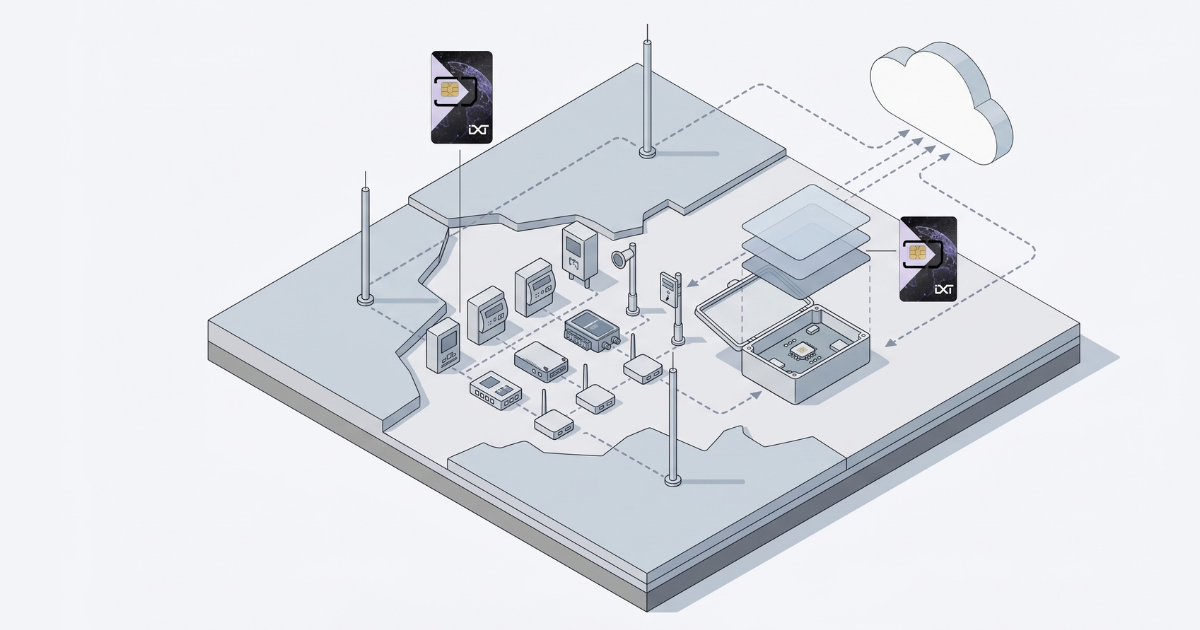
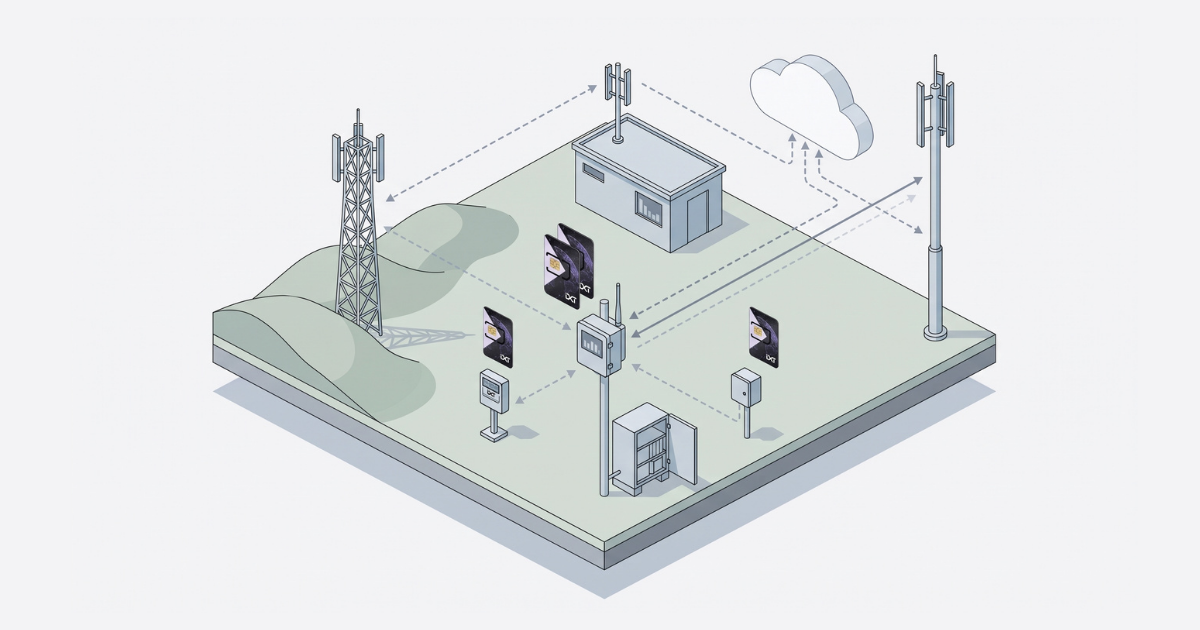
A multi-IMSI SIM holds several of these identities at once. When the active identity performs badly in a location, the SIM presents a different one and attaches through a different operator's agreements. The device does not know it happened. Nobody visits the site.
This is a different mechanism from eUICC. eUICC downloads a new operator subscription that was not previously on the SIM. Multi-IMSI switches between identities already loaded. One is provisioning, the other is failover. Long-lived fleets want both, for different reasons.
A coverage map shows where a network reaches. It does not show what your device meets on the day.
Three things go wrong under a single identity:
None of these are faults in the device. All of them look like device faults on a dashboard.
Multi-IMSI turns a single point of dependency into a set of alternatives that the SIM works through without help.
When attachment to the current identity fails repeatedly, the SIM moves to another and tries again through a different operator's roaming position. A device that would have sat in a retry loop for hours gets back on within a switching cycle.
A logistics unit crossing from the Netherlands into Belgium and on into Germany touches three carrier relationships in a working day. With one identity, each border is a bet on one operator's agreement in that country. With several, each border becomes a choice between routes.
Several markets restrict devices that sit on a foreign network indefinitely. A local IMSI in those markets removes the permanent roaming exposure without a hardware change. IXT supports local IMSI options in key markets to reduce permanent roaming risk.
When an agreement behind one identity weakens, traffic moves to another identity. The fleet keeps working while the commercial side gets sorted out, rather than the other way round.
Worth being direct about the limits, because the technology gets oversold.
Three decisions matter more than the rest.
Decide it before hardware freeze. A soldered SIM with one identity and no remote provisioning is a decade-long commitment made in an afternoon.
Match identities to your route to market. Identities that cover markets you do not ship to add nothing. Identities in markets with permanent roaming rules are the ones that earn their place.
Pair it with visibility you trust. A fleet that heals itself silently is a fleet you learn nothing from. Many provider portals show usage on a 24 to 48 hour delay, which is long enough for an incident to open and close unseen. The IXT CMP shows every SIM in real time: status, usage, location, session logs.
No. Standard roaming reaches other networks through one operator's agreements. Multi-IMSI presents a different operator identity, so it reaches a different set of agreements.
No. The switching logic sits on the SIM and in the network. From the device's point of view it attaches to a mobile network as it always did.
It depends on the failure and the switching policy in place. The honest framing is minutes rather than milliseconds. Design your application to survive a gap rather than assuming there will not be one.
For a fleet with a long life, yes. Multi-IMSI handles failover between identities you already hold. eUICC adds an operator you did not have when the device shipped.
At the point traffic leaves the device. Reaching the network reliably and reaching it safely are separate jobs. SecureNet keeps the traffic off the public internet. The Zero Trust layer checks every session in the network and cloud.
Multi-IMSI does not make a fleet immune to network problems. It removes the assumption that one operator's day determines your uptime. For fleets that cross borders and stay in the field for years, that assumption is the one thatcosts the most when it turns out to be wrong.
Ask us how it works for your deployment. Book a demo at ixt.io.

Related articles
Multi-IMSI failover is not constant. Here are the six moments a switch actually triggers, what it fixes, what it does not fix, and what to ask a provider.
Multi-IMSI and eUICC reduce permanent roaming risk in different ways. How each supports IoT compliance, where each stops, and what to check first.
IoT SIM data pooling lets your whole fleet share one data allowance. See how it works, how it stops stranded data and overages, and when to use it.