What is multi-IMSI failover in IoT connectivity
Multi-IMSI lets one SIM hold several operator identities and switch between them. How the switching logic works, and where it beats single network coverage.

Multi-IMSI lets one SIM hold several operator identities and switch between them. How the switching logic works, and where it beats single network coverage.
Filter articles
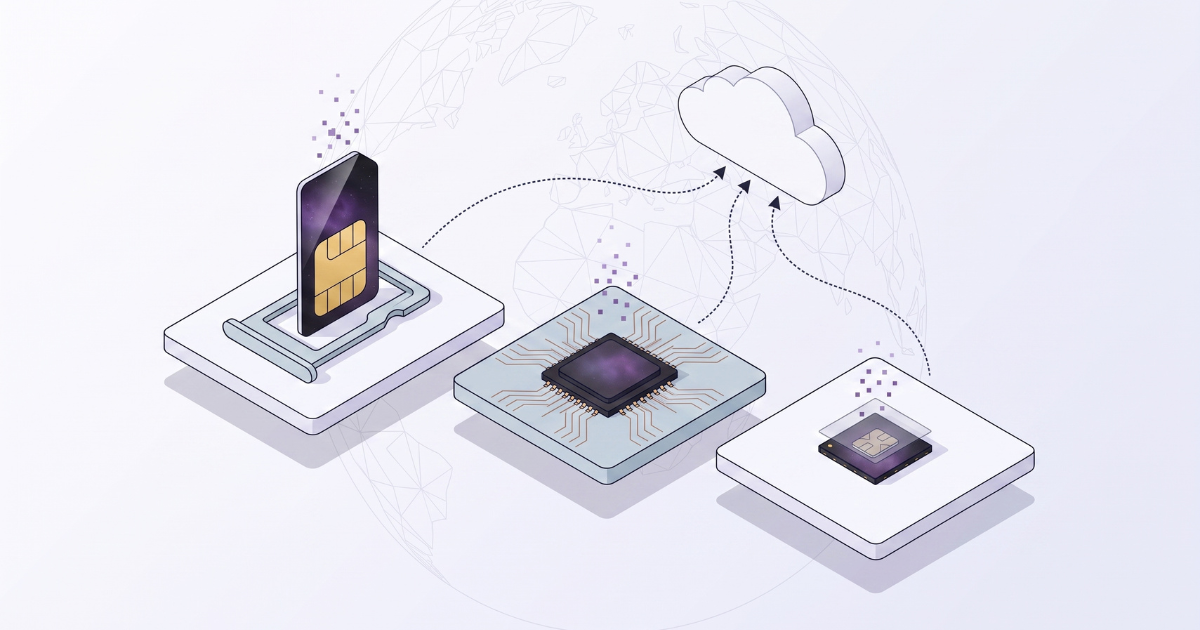
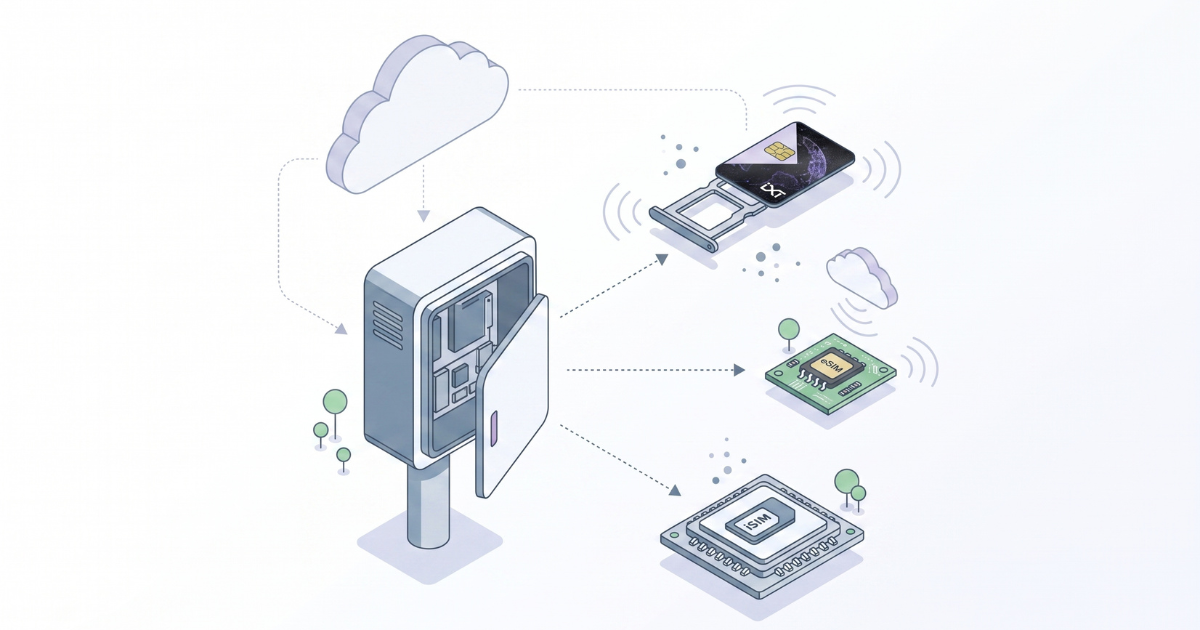
Roaming rules, local compliance and remote provisioning decide the SIM form factor, not the hardware. A buyer's comparison of SIM, eSIM and iSIM.
IoT SIM, eSIM or iSIM for a multi country deployment? Compare them on roaming rules, local compliance, remote provisioning and field replaceability.
A decision-stage comparison of SIM, eSIM and iSIM for multi-country IoT fleets, mapping roaming rules, remote provisioning and lifecycle cost to real rollouts.
IoT SIM, eSIM or iSIM for a multi-country deployment? The form factor sets provisioning and board space. The provider decides everything that comes after.
A clear guide to enterprise IoT SIM cards in 2026. How they work, when to use a global IoT SIM, the difference between eSIM and iSIM, and how data pooling supports large deployments.
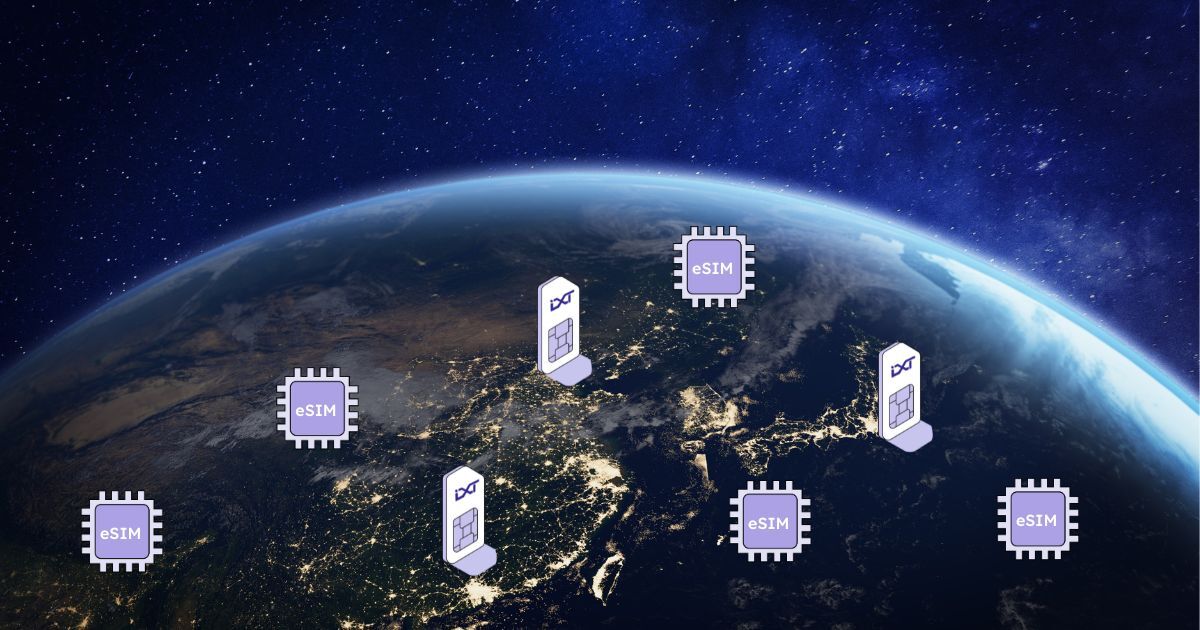
Multi-IMSI and eUICC provide flexible, resilient global IoT connectivity, ensuring compliance, security, and seamless operations across borders.
Smart Cities rely on connected systems. Learn how Zero-Trust connectivity protects urban IoT and keeps data private across every district.
eSIM/iSIM vs traditional SIM for IoT: clear definitions, pros & cons at scale, and how SGP.32 + IoT SAFE deliver secure, compliant, low-touch deployments.