How IoT Connectivity Layers Work Together
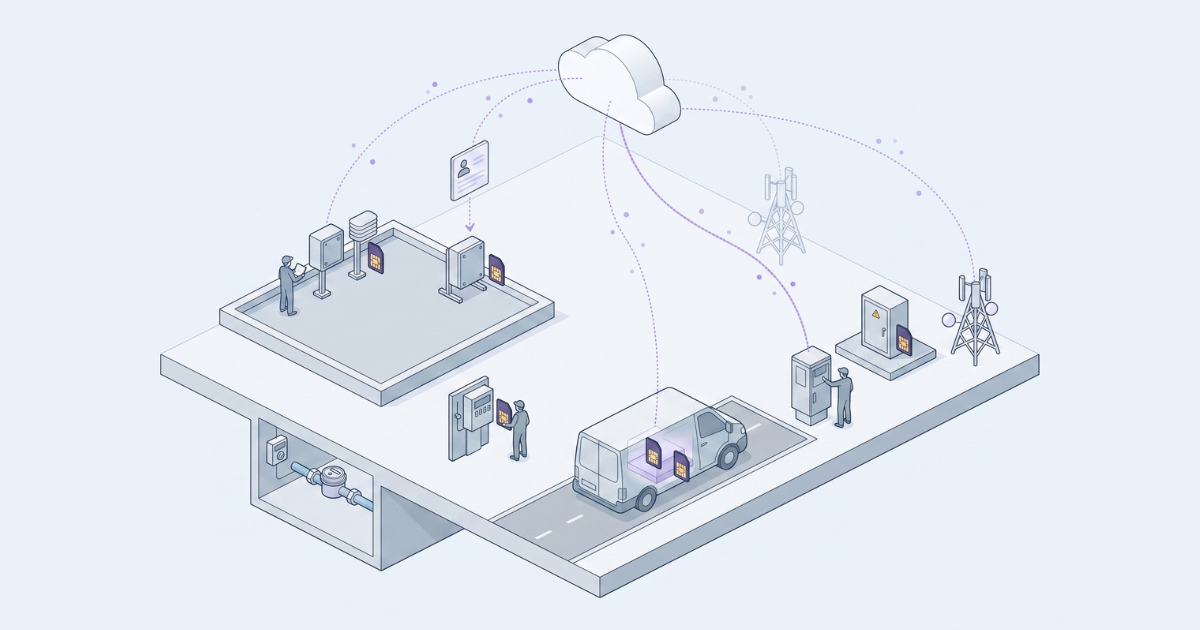
The layers of a modern IoT connectivity architecture, what each one owns, and where device identity, private routing, policy enforcement and monitoring belong.

The layers of a modern IoT connectivity architecture, what each one owns, and where device identity, private routing, policy enforcement and monitoring belong.
Filter articles
Provider portability decides whether you get to change IoT connectivity supplier. What locks fleets in, what SGP.32 changes, and how to test for it.
Compare multi-carrier IoT monitoring platforms on data freshness, traffic visibility and API access. Most dashboards report a day late. Here is what to ask.
Permanent roaming restrictions create compliance risk for IoT fleets. How to design local connectivity using multi-IMSI, eUICC, and managed network control.
On a perimeter, the intruder picks the time and the place, and that includes the weakest point in your radio coverage. What the alarm transmission standards already assume.
The five layers of a modern IoT connectivity architecture, from SIM identity to Zero Trust enforcement, and where cross-border deployments break.
A buyer framework for evaluating IoT connectivity providers on security architecture, coverage resilience, platform control, compliance and pricing.
Learn how to manage IoT SIM cards effectively with real-time monitoring, security best practices, and cost control strategies for reliable connectivity.




.png)