Short answer: The supermarket freezer controllers attacked across Europe in autumn 2026 were reachable from the open internet. On a private APN, nothing on the internet has a route to the device, so there is nothing to find and no login to try. Remote access for technicians still needs control, and that is the job of Zero Trust.
What made the freezers reachable
If you run unattended equipment, the freezer case is worth a close look. The controllers sat on public IP addresses, open to anyone. Henning Solberg, CTO and co-founder of IXT, puts it plainly: “The controllers of these freezers have been placed on the public internet, basically just out in the open, on publicly accessible IP addresses available for anyone to connect to.”
A device in that position has one line of defence left, its login. Automated scanners find devices on public IP addresses around the clock, and a factory password does not hold for long.
For the full background, read our news article on the freezer attacks.
It was never a 4G problem
Some coverage pointed at the freezers' 4G connections as the weak point. Henning disagrees: “4G in itself is obviously just a carrier here. If you put a device on the open internet, whether it's a wired connection, a Wi-Fi connection, a satellite connection, whatever, if you put a public IP on it with no protection, it will be harmed by somebody, no matter what.”
The radio does not expose your device. The SIM setup does. A SIM on an internet APN with a public IP address puts your device on the open internet, the same as plugging it into a router with no firewall.
What a private APN changes
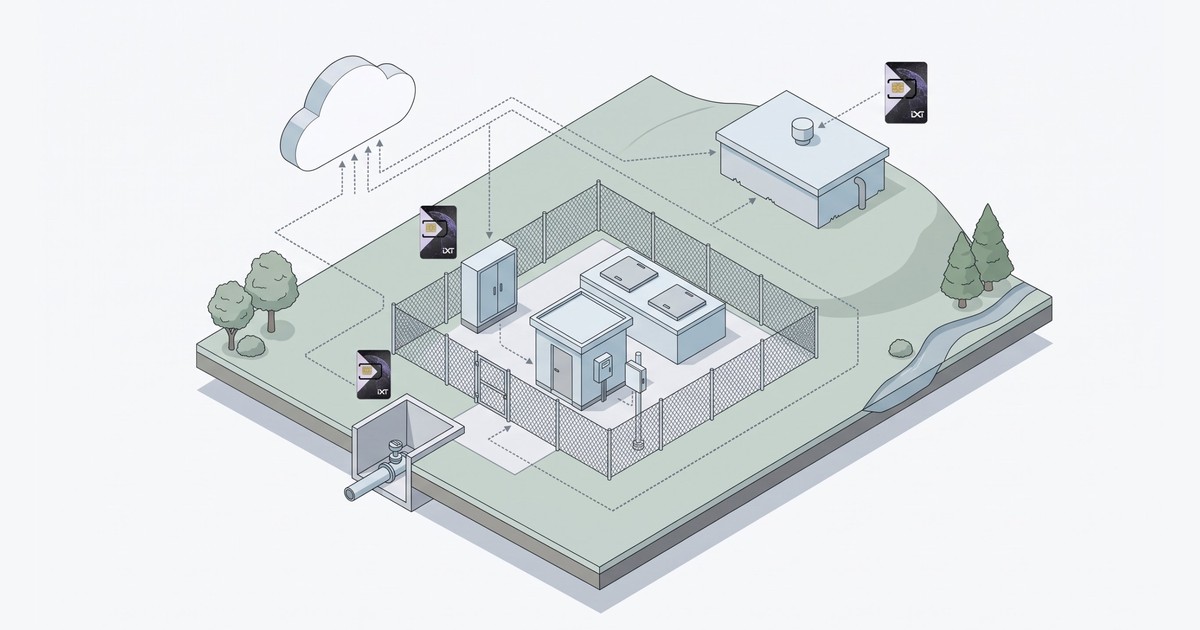
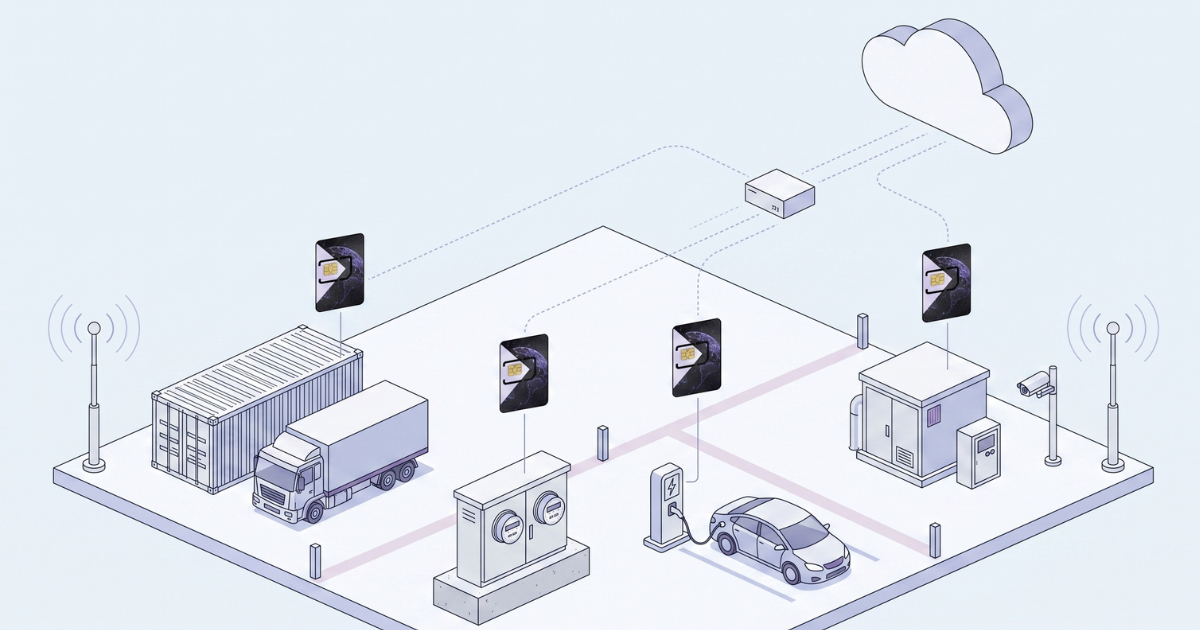
A private APN is a closed network inside the mobile network. Your devices reach the backend systems you connect to that APN, and nothing else. Nothing on the internet has a route to them, so there is nothing for an outsider to scan, find or log in to.
Think about what a freezer controller talks to: the alarm service, the service contractor, the energy platform. Two or three known systems. None of them needs the device on the open internet.
A private APN also keeps your devices out of botnets. Exposed devices get compromised and used to attack other targets on the internet, and the owner rarely finds out in time. On a private APN, Henning says, that stops: “If you are in a private environment where there is no internet access, simply because there is no need for internet access directly from that SIM, then this would never happen.”
The gap: who else needs access
A private APN keeps outsiders out. Your service partners still need in. “Some of the more advanced equipment in the modern store is also managed by a third party, or by the manufacturers. And they could have their own security policies, their own way of communicating with the devices.”
The old way to give them access was a VPN client into the private APN. That tunnel gives the technician's laptop a route to every device on the APN, not only the one they came to fix.
Henning's rule for remote access is short: “Basically deny everything and just allow the access you really need for remote troubleshooting.”
That is how IXT connects equipment like this. Your devices sit on a private APN with no public address. Technicians get clientless browser access to one device at a time through Zscaler ZTNA, and every session is recorded. The Illumio traffic map shows what each device talks to, so a controller that starts calling somewhere new stands out.
What to check this week
Start with three questions about your own equipment. Is any of it on a public IP address? Who has remote access, from which vendors, and through what? Would you notice if a device started talking to a server it had never contacted before?
If the answer to any of them is “not sure”, talk to an IXT expert about moving your devices to a private APN with Zero Trust access.
Why trust this guide
This guidance is based on real IoT and OT deployments in regulated industries including energy, utilities, and industrial environments.
IXT designs and operates secure connectivity architectures where:
- devices are deployed across multiple countries and networks
- SIM-level identity is enforced at the network edge
- third-party access is controlled without VPNs
- audit trails are required for regulatory compliance (including NIS2)
The patterns described here reflect how these environments are secured in practice, not theoretical models.
About the author
This article was written by the IXT Connectivity and Security team.
IXT operates a full MVNO core network and delivers secure IoT connectivity across 190+ countries and 600+ mobile networks. The team works directly with industrial, utilities, and infrastructure operators to design and secure large-scale IoT and OT deployments.
Their focus is on network-level Zero Trust architecture, SIM-based identity, and secure device communication without relying on VPNs or endpoint agents.