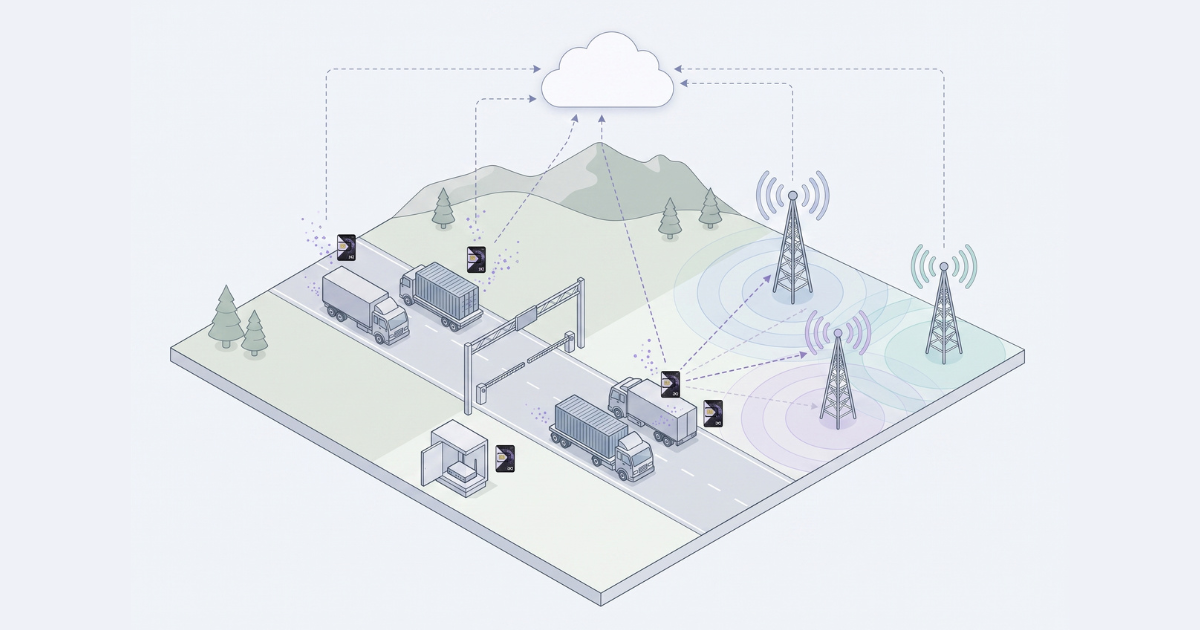
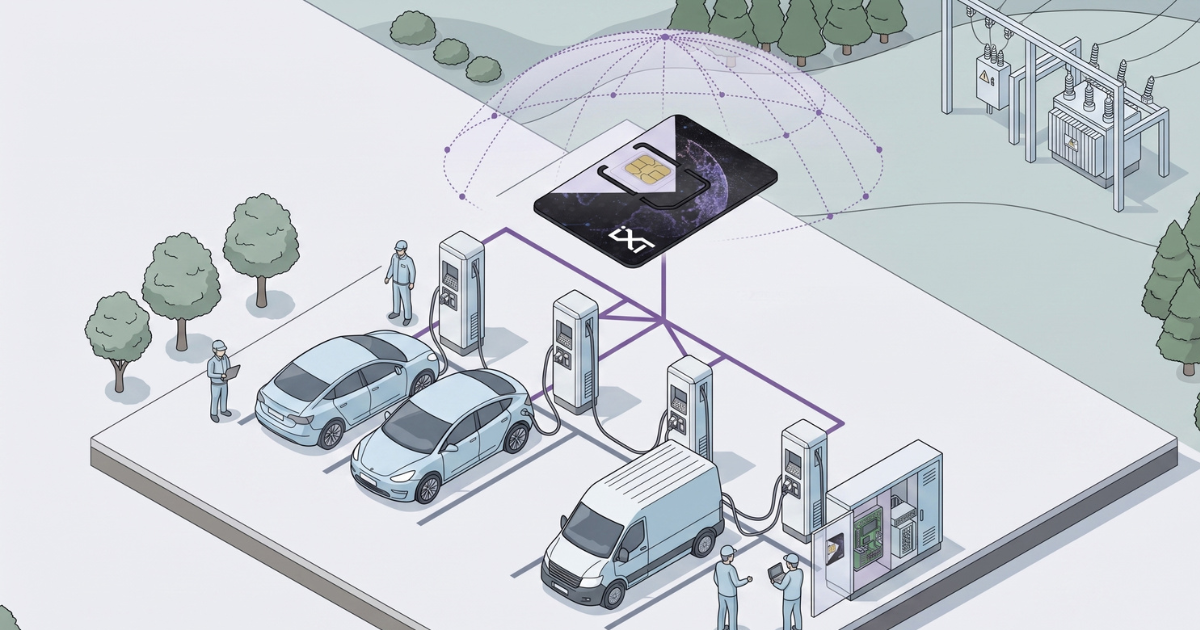
Your IoT devices cannot defend themselves. A water meter, a charge point controller, a vibration sensor: none of them run security software, and none of them ever will. That is a problem for Zero Trust, which normally depends on an agent sitting on the device to verify identity and check posture before a session opens. Zero Trust for headless devices solves it by moving enforcement off the device and into the network. The SIM supplies the identity. The policy decision happens in the network and the cloud, before traffic reaches an application.
Why the agent model breaks
Zero Trust as most vendors ship it rests on three device-side assumptions. The device runs an operating system that accepts an agent. The device holds credentials it protects. The device reports its own health. A headless sensor breaks all three. It has no operating system worth the name, it has whatever key was flashed at manufacture, and it reports nothing about itself beyond the data it was built to send.
Retrofitting is not an option either. Fleets of this kind number in the thousands and sit in cabinets, substations, and vehicles across several countries. Firmware updates are slow and risky. Physical access is expensive. Any control that requires touching the device is a control you will not deploy.
The exposure is measurable rather than theoretical. Palo Alto Networks analysed over 27 million connected devices for its 2025 Device Security Threat Report and found 21% of IoT devices carry at least one known vulnerability.
What the SIM already knows
The SIM is the one credential a headless device carries by default. It is tamper resistant, issued before deployment, and bound to the hardware through IMEI lock. That gives the network a strong identity for a device that presents none itself. Traffic arriving on that IMSI is attributable without asking the device to prove anything.
Getting the device off the public internet
Identity alone does not reduce exposure. If the device dials out over the public internet, its ports stay reachable and its traffic crosses infrastructure you do not control. IXT SecureNet routes that traffic through a private APN to your systems or your cloud, with private addressing and direct connections to AWS, Azure, GCP, and Alibaba.
A private APN hides traffic but does not defend it. Inside the APN the network is still flat. One compromised device reaches every other device in the same space. That is the job of the enforcement layer, and it is a separate layer.
Where enforcement happens
IXT Zero Trust runs Zscaler ZTNA through the SIM. Devices initiate outbound connections only. No ports are exposed and no client is installed. Each device reaches the specific application it was authorised to reach and nothing else, which is least privileged access applied to hardware that has no way to enforce it locally.
Third-party access follows the same rule. A vendor who needs to reach a controller gets a browser session, time limited and recorded, brokered through the Zero Trust Exchange. No VPN. No network-wide reach. No client on the vendor's laptop touching your OT space.
What this covers for NIS2, and what it does not
NIS2 Article 21(2) asks for access control, network segmentation, incident detection, supply chain access management, audit trails, and continuous authentication. IXT Zero Trust addresses those technical controls for IoT and OT devices over cellular, and gives you a record of every device, every user, and every third party that reached a device and what they did there.
Risk documentation, incident response plans, staff training, and supplier governance stay with you. IXT Zero Trust does not make you NIS2-compliant on its own. Treat any vendor who claims otherwise with suspicion.
Where this fits
Zero Trust for headless devices earns its place when the fleet is large, the devices are unmanaged, third parties need access, or a regulator will ask you to prove device control. IXT qualifies it at 500 devices and above. Below that, a global SIM with real-time fleet visibility covers most of what you need. It does not replace a SIEM, a security operations centre, or an incident response function, and not every device type works without a technical assessment first.
Ask us how it works for your deployment.