IoT Roaming Restrictions by Country in 2026
Where permanent roaming rules break IoT deployments, why regulators impose them, and what to use instead of a roaming SIM in restricted markets.
The devices worked for nine months. Then a regional carrier ran its housekeeping, and 400 units in one market stopped attaching on the same afternoon. Nothing changed in your firmware. Nothing changed in your platform. A roaming agreement reached its limit.
Permanent roaming is the constraint that catches teams after deployment rather than during procurement. It is a regulatory and commercial question that lands as a hardware problem, which is why it is worth designing around before the first unit ships.
Roaming exists so a subscriber from one country gets service while visiting another. It assumes the visitor goes home. An IoT device does not. A sensor installed in Spain on a SIM from another country roams there for its entire operating life, which is 5, 10, or 15 years.
Permanent roaming is that state: a device attached indefinitely to a visited network it never leaves. Regulators and carriers restrict it for three reasons.
The rules reach your fleet through three different mechanisms, and the difference matters when you plan.
The national regulator bars foreign SIMs from operating permanently in-country. Compliance is not negotiable through your provider, and the remedy is a local subscription identity. Brazil is the most cited example, where Anatel rules require local connectivity for devices operating on a permanent basis.
Service is available, but only through a locally licensed operator or a local partnership. India and China both work this way in practice, so multi-country deployments need a local profile or a local partner arrangement rather than an inbound roaming SIM.
No regulation prohibits the device, but the visited network applies a time window in its roaming agreements. A 90-day window is the common pattern, after which the SIM is barred, throttled, or flagged for review. This is the mechanism behind most sudden mid-life disconnections, because it fires quietly and per-carrier.
Restrictions and enforcement change from year to year, and enforcement varies between carriers inside the same market. Treat the list below as a prompt to verify rather than a table to trust.
Confirm the current position for each market with your connectivity provider before you commit hardware, and get the answer in writing per market rather than as a global assurance.
The failure is rarely announced. Four signatures are worth recognising.
The last one is the expensive one. A truck roll to a wind turbine, a substation, or a vessel costs multiples of the connectivity itself.
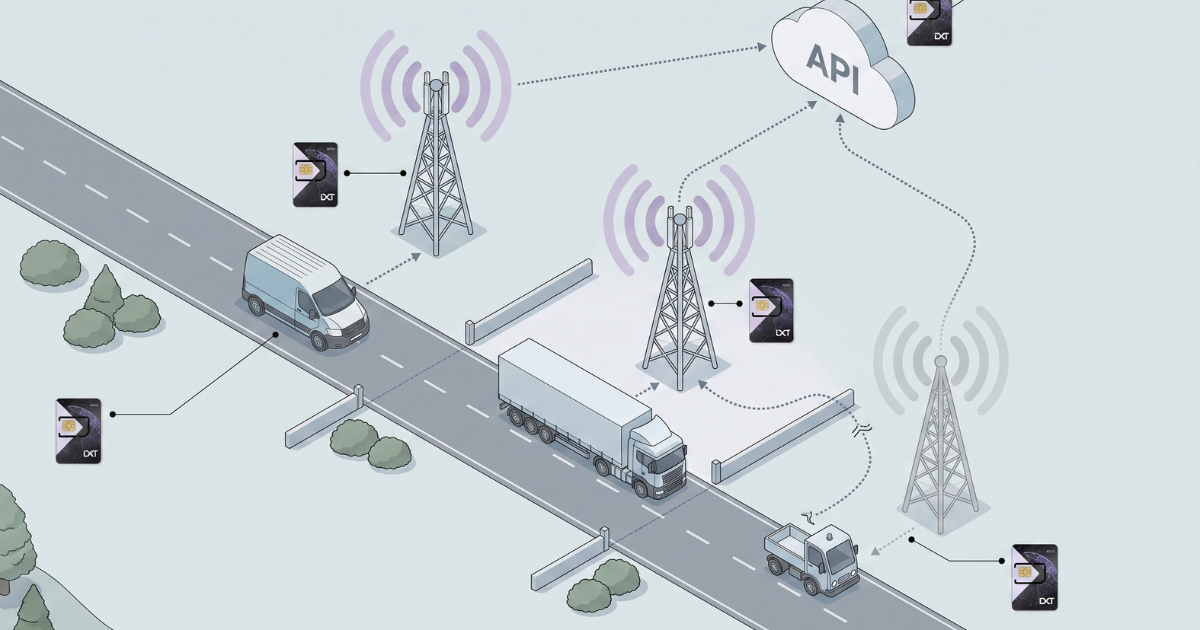
One SIM holds several operator identities and switches between them. When one network bars the device or an agreement lapses, the SIM attaches through another identity in the same market. This removes single-carrier dependency and adds resilience against outages that have nothing to do with roaming rules.
Multi-IMSI works within the agreements available to your provider. It handles carrier policy limits well. It does not create a local subscription where a regulator requires one.
An eUICC accepts new operator profiles over the air after the device is in the field. Where a market later demands a local identity, you download a local profile rather than sending a technician. GSMA SGP.32 defines the IoT variant of this and removes the assumption that a person is present to accept the change, which the earlier consumer specification carried.
Design consideration: the device must reach the provisioning service to receive a profile. A device already barred from attaching cannot download the profile that would fix it, so provisioning has to be planned before the block, not after.
For markets with genuine regulatory prohibition, a local subscription is the answer. That means an in-country IMSI so the device is a local subscriber rather than a permanent visitor. IXT supports local IMSI options in key markets to reduce permanent roaming risk.
The decisions that trap teams are made at hardware selection. Specify an eUICC-capable form factor, whether SIM, eSIM, or iSIM, even if you launch on a single roaming profile. Confirm the radio bands and technologies in every target market, since LTE-M and NB-IoT availability varies. Retrofitting a SIM form factor across a deployed fleet is the most expensive fix on this page.
| Approach | Solves | Does not solve |
|---|---|---|
| Single roaming profile | Fast launch, one commercial relationship | Carrier windows, regulatory prohibition, carrier outages |
| Multi-IMSI | Carrier policy limits, single-carrier outages, coverage gaps | Markets requiring a local subscriber identity |
| eUICC with remote provisioning | Changing rules after deployment, operator switching | Devices already barred before a profile is delivered |
| Local profile in-market | Regulatory prohibition, data residency expectations | Operational simplicity, since more relationships are in play |
Every mitigation above depends on knowing what happened, and when. Many connectivity platforms report on a 24 to 48 hour delay, which turns a roaming bar into a mystery that plays out over a week. IXT's CMP shows every SIM in real time: status, usage, location, and session logs, with alerting per group. When a cohort in one market stops attaching, that pattern is visible the same hour rather than at month end.
IXT runs a dedicated mobile core built for IoT from the ground up rather than a virtualised platform on shared infrastructure, with coverage across 600+ mobile networks in 190+ countries. That gives direct control over routing and policy, and it is why the roaming question is answered per market rather than as a single global claim.
Brazil, India, China, Turkey, and several Gulf markets are the most frequently flagged, alongside carrier-enforced windows in North America, Japan, Singapore, Vietnam, and parts of Africa and Oceania. Rules and enforcement change, so verify each target market at design time rather than working from a published list.
A 90-day window written into the roaming agreement is the common pattern, though some carriers apply longer or shorter thresholds and some markets prohibit foreign SIMs outright. The threshold sits with the visited network, not with your device.
An eSIM makes the fix deliverable without a site visit, which is not the same as removing the restriction. The eUICC lets you install a compliant local profile remotely. You still need a provider with that profile available in the market.
For carrier policy limits and outage resilience, multi-IMSI does most of the work. Where a regulator requires a local subscriber identity, a local profile is the answer.
It stops attaching to that network. Depending on the deployment, the device retries and drains battery, buffers data until storage fills, or goes silent with no alert reaching your platform. This is why attach-failure alerting matters more than usage alerting.
They are separate questions that arrive together. Roaming determines which network carries the traffic. Data residency and NIS2 Article 21(2) technical controls concern where traffic goes and who reaches it. Private routing and per-session access control address the second question regardless of which identity the device attaches with.
With an eUICC-capable device and a provider that holds local profiles, yes, remotely. With a soldered single-profile SIM in a sealed enclosure, the fix is a technician and a ladder.
Ask us how it works for your deployment. Book a demo at ixt.io

Related articles
Where permanent roaming rules break IoT deployments, why regulators impose them, and what to use instead of a roaming SIM in restricted markets.
Permanent roaming works for travelers. It was never designed for IoT. Learn what permanent roaming is, which countries ban it, and what global IoT deployments need instead.
Multi-IMSI reduces single carrier dependency for IoT fleets. How failover actually works, where it helps across borders, and what it does not fix.