Why this decision matters
Most teams treat this as a hardware decision.
At scale, it becomes an operational risk.
You start with:
- a SIM choice
- a device design
- a connectivity provider
Then you scale.
That’s when problems appear:
- devices deployed in multiple countries
- need to switch operators
- rising connectivity costs
- lack of visibility into SIM usage
What breaks:
- You cannot change operator without physical access
- You cannot optimise connectivity per region
- You cannot control usage or cost centrally
This is where SIM decisions become expensive.
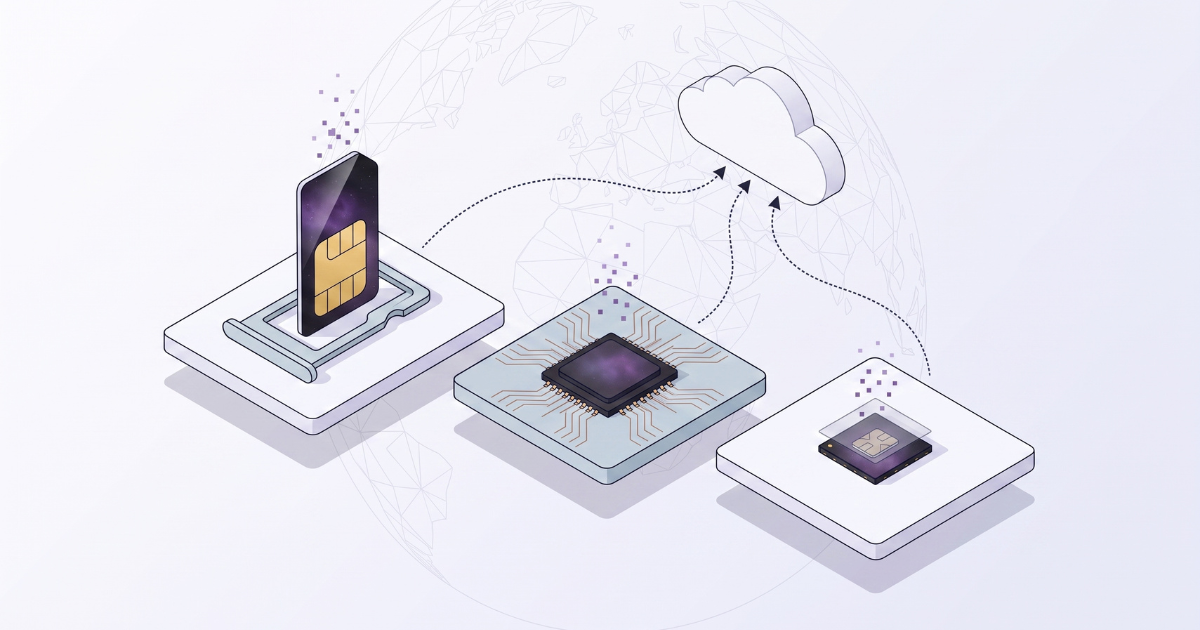
Definitions: SIM vs eSIM vs iSIM
SIM (Removable SIM)
- Physical, removable card
- Single operator profile
- Manual replacement required
Reality at scale:
- Every change = field operation
- High operational cost
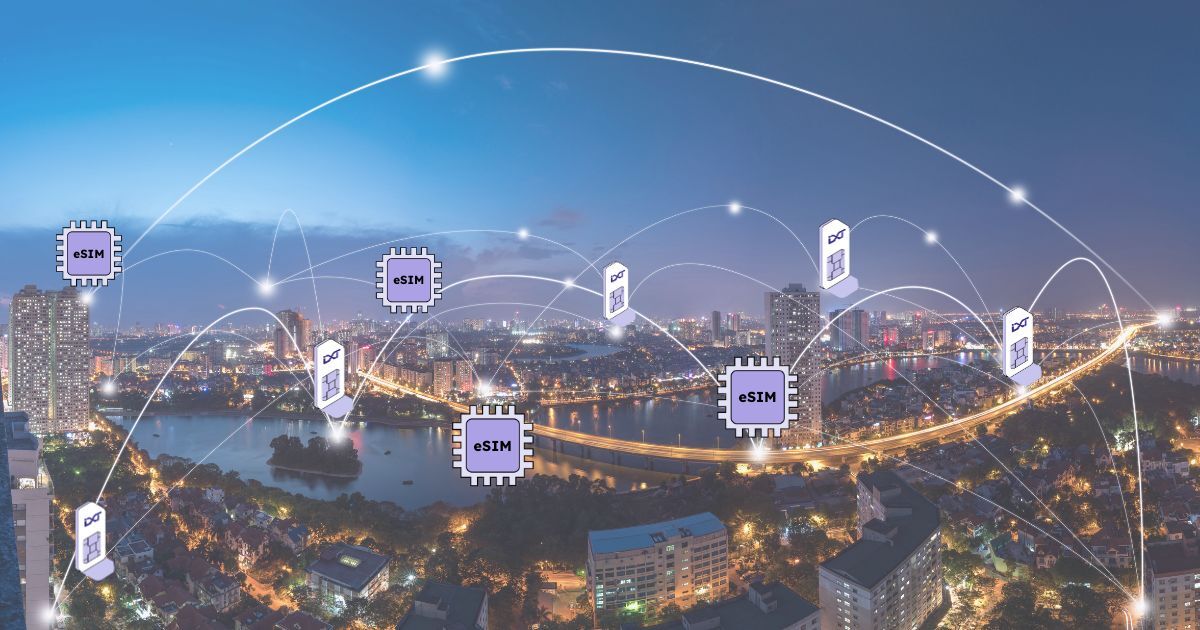
eSIM (Embedded SIM / eUICC)
- Soldered into the device
- Supports remote SIM provisioning (RSP)
- Multiple operator profiles can be managed remotely
Reality at scale:
- Enables global deployments
- Reduces need for physical access
iSIM (Integrated SIM)
- Integrated into chipset
- No separate SIM hardware
- Uses same RSP model as eSIM
Reality at scale:
- Lower hardware cost
- Less flexibility if chipset decisions change
Comparison matrix (enterprise decision level)
|
Criteria
|
SIM
|
eSIM (eUICC)
|
iSIM
|
|
Form factor
|
Removable
|
Embedded
|
Integrated
|
|
Provisioning
|
Manual
|
Remote (RSP)
|
Remote (RSP)
|
|
Operator switching
|
Physical swap required
|
Remote
|
Remote
|
|
Global deployment
|
Poor
|
Strong
|
Strong
|
|
Operational overhead
|
High (truck rolls)
|
Low
|
Low
|
|
Provisioning complexity
|
Low
|
Medium (RSP setup)
|
Medium
|
|
Lifecycle flexibility
|
Low
|
High
|
High
|
|
Hardware dependency
|
Replaceable
|
Fixed to PCB
|
Fixed to chipset
|
|
Vendor lock-in risk
|
Medium
|
Low–Medium
|
High (chipset)
|
|
Failure scenario
|
Requires physical intervention
|
Profile failure / provisioning issues
|
Hardware-level constraint
|
|
Cost model
|
Low upfront, high OPEX
|
Balanced
|
Lower long-term (at scale)
|
|
Security role
|
Identity only
|
Identity only
|
Identity only
|
|
Best use case
|
Local, small deployments
|
Global fleets
|
High-volume constrained devices
|
How they work
SIM model
- Device connects using a fixed IMSI
- Traffic routed via one operator
- Changes require SIM replacement
Failure point:
Scaling across regions requires physical intervention.
eSIM / iSIM model (RSP)
- Device contains eUICC/iSIM
- Profiles downloaded remotely
- Operator can be changed without device access
Key benefit:
Decouples hardware from connectivity decisions.
Where this still falls short
Even with eSIM:
- You still depend on provider coverage
- You still need lifecycle management
- You still lack visibility without CMP
Important:
RSP solves provisioning. It does not solve operations.
Trade-offs and limitations (real-world)
SIM: what goes wrong
- Scaling globally → requires physical SIM swaps
- Operator change → truck rolls
- Cost optimisation → impossible per region
Result: operational cost grows faster than deployment.
eSIM: what goes wrong
- RSP infrastructure complexity
- Profile management challenges
- dependency on ecosystem support
Common failure:
- teams underestimate provisioning complexity
iSIM: what goes wrong
- chipset lock-in
- difficult to change hardware strategy
- limited vendor ecosystem
Critical risk:
- wrong early decision becomes permanent
Why SIM form factor is not the real decision
SIM choice does not solve:
- global coverage
- cost control
- lifecycle management
- security
You can choose:
and still fail at scale.
Because the real problems are:
- fragmented connectivity
- lack of visibility
- no central control
The real architecture: Global SIM + CMP + SecureNet
1. Global connectivity
- multi-network per country
- consistent performance across regions
- no reliance on single operator
2. CMP (control layer)
This is where most deployments fail.
You need:
- real-time SIM usage visibility
- diagnostics and troubleshooting
- automation rules
- lifecycle management
Without CMP:
- you cannot manage scale
- you cannot optimise cost
- you cannot respond to issues
3. Private networking (SecureNet)
- traffic routed outside public internet
- private IP addressing
- controlled data flows
Difference vs APN:
- APN = private but broad trust
- SecureNet = isolated and controlled routing
4. Data pooling
- shared usage across SIM fleet
- eliminates per-SIM waste
- reduces cost unpredictability
Key takeaway
SIM type is a device decision
Architecture is a business decision
How to migrate from SIM to eSIM or iSIM
When migration makes sense
- scaling beyond one country
- devices difficult to access
- long lifecycle (5–15 years)
- need to optimise cost dynamically
Step-by-step migration
1. Audit current deployment
- number of devices
- regions
- operators
- cost structure
2. Validate hardware capability
- eSIM/iSIM support
- firmware requirements
3. Select connectivity architecture
- global SIM provider
- CMP platform
- network model
4. Design provisioning model
- profile strategy
- fallback logic
- switching rules
5. Pilot deployment
- test regions
- validate switching
- validate CMP visibility
6. Gradual rollout
- phased migration
- monitor performance
- adjust policies
Timeline reality
- pilot: 1–3 months
- rollout: 6–18 months
What goes wrong in migration
- RSP complexity underestimated
- device firmware limitations
- internal coordination delays
- lack of CMP visibility
EV charging considerations
- remote locations
- high uptime requirements
- long device lifecycle
Failure scenario:
- wrong SIM choice → expensive site visits
Industrial IoT considerations
- harsh environments
- difficult physical access
- high downtime cost
Failure scenario:
- no remote control → slow recovery
Industry examples
EV charging
Without eSIM:
- SIM swaps require field visits
Without CMP:
- no visibility into connectivity issues
With full architecture:
- remote provisioning
- real-time diagnostics
Industrial IoT
Without global SIM:
- inconsistent connectivity
Without private networking:
- exposure to public networks
Which should you choose?
Choose SIM if
- small deployment
- local only
- devices accessible
Choose eSIM if
- global deployment
- need flexibility
- want remote provisioning
Choose iSIM if
- high-volume production
- constrained devices
- long-term hardware stability
Enterprise recommendation
- eSIM or iSIM for flexibility
- Global SIM architecture for scale
Why enterprises choose IXT regardless of SIM type
Form factor agnostic
- supports SIM, eSIM, iSIM
- no lock-in to hardware decisions
Multi-network global coverage
- 600+ networks
- 190+ countries
- automatic network selection
CMP as control layer
- real-time visibility
- diagnostics and alerts
- automation rules
- API integration
This is what enables scale.
SecureNet private networking
- keeps traffic off public internet
- controlled routing
- reduced exposure
Data pooling
- shared usage
- cost optimisation
- predictable billing
What this means for you
- flexibility at device level
- control at network level
- visibility at operational level
FAQs
What is the difference between SIM, eSIM, and iSIM?
SIM is removable, eSIM is embedded with remote provisioning, and iSIM is integrated into the chipset. The difference is how they are deployed and managed. All provide device identity, but none control routing, security, or lifecycle management.
Which is better for IoT: eSIM or iSIM?
eSIM is currently more mature and widely supported, making it the default choice for enterprise deployments. iSIM is better for constrained, high-volume devices. The best choice depends on hardware constraints, but connectivity architecture matters more than form factor.
Is eSIM more secure than SIM?
No. SIM, eSIM, and iSIM all provide identity only. Security is enforced at the network and cloud layers. Choosing eSIM does not improve security unless combined with private networking and Zero Trust enforcement.
What is remote SIM provisioning (RSP)?
RSP allows you to download and manage operator profiles remotely on eSIM and iSIM devices. It removes the need for physical SIM swaps and enables global deployments, but requires proper infrastructure and lifecycle management.
Can you switch operators with eSIM?
Yes, eSIM allows remote switching between operator profiles. However, the effectiveness depends on your connectivity provider and provisioning setup. Without proper architecture, switching can still be limited.
What is iSIM used for in IoT?
iSIM is used in devices where space, power, and cost are critical. It integrates SIM functionality directly into the chipset, reducing hardware requirements but increasing dependency on chipset vendors.
Do I need eSIM for global IoT deployments?
Not necessarily. eSIM helps, but global deployments depend more on having a provider with multi-network coverage and strong lifecycle management.
What is a global IoT SIM?
A global IoT SIM provides connectivity across multiple countries and networks, allowing devices to connect reliably without needing multiple local SIMs.
How do you manage IoT SIMs at scale?
Using a Connectivity Management Platform (CMP), which provides real-time visibility, provisioning, diagnostics, and automation across the SIM fleet.
What are the risks of choosing the wrong SIM type?
- expensive device replacements
- inability to switch operators
- high operational cost
- limited scalability
Can iSIM replace eSIM?
Possibly in the future, but today eSIM has broader support. iSIM adoption is still growing and depends heavily on chipset ecosystems.
Does SIM type affect connectivity quality?
No. Connectivity quality depends on the network and provider, not the SIM form factor.
Final recommendation
SIM, eSIM, and iSIM are important decisions.
But they are not the most important ones.
For enterprise IoT, success depends on:
- global connectivity
- lifecycle management
- network control
- visibility
Choose the right form factor.
Then choose the right architecture.
Request a deployment consultation
Get a structured review of your IoT deployment:
- identify limitations in your current SIM strategy
- assess global scalability risks
- evaluate lifecycle and cost inefficiencies
- map the right architecture for your devices
Request a tailored consultation based on your device volume, regions, and deployment model.