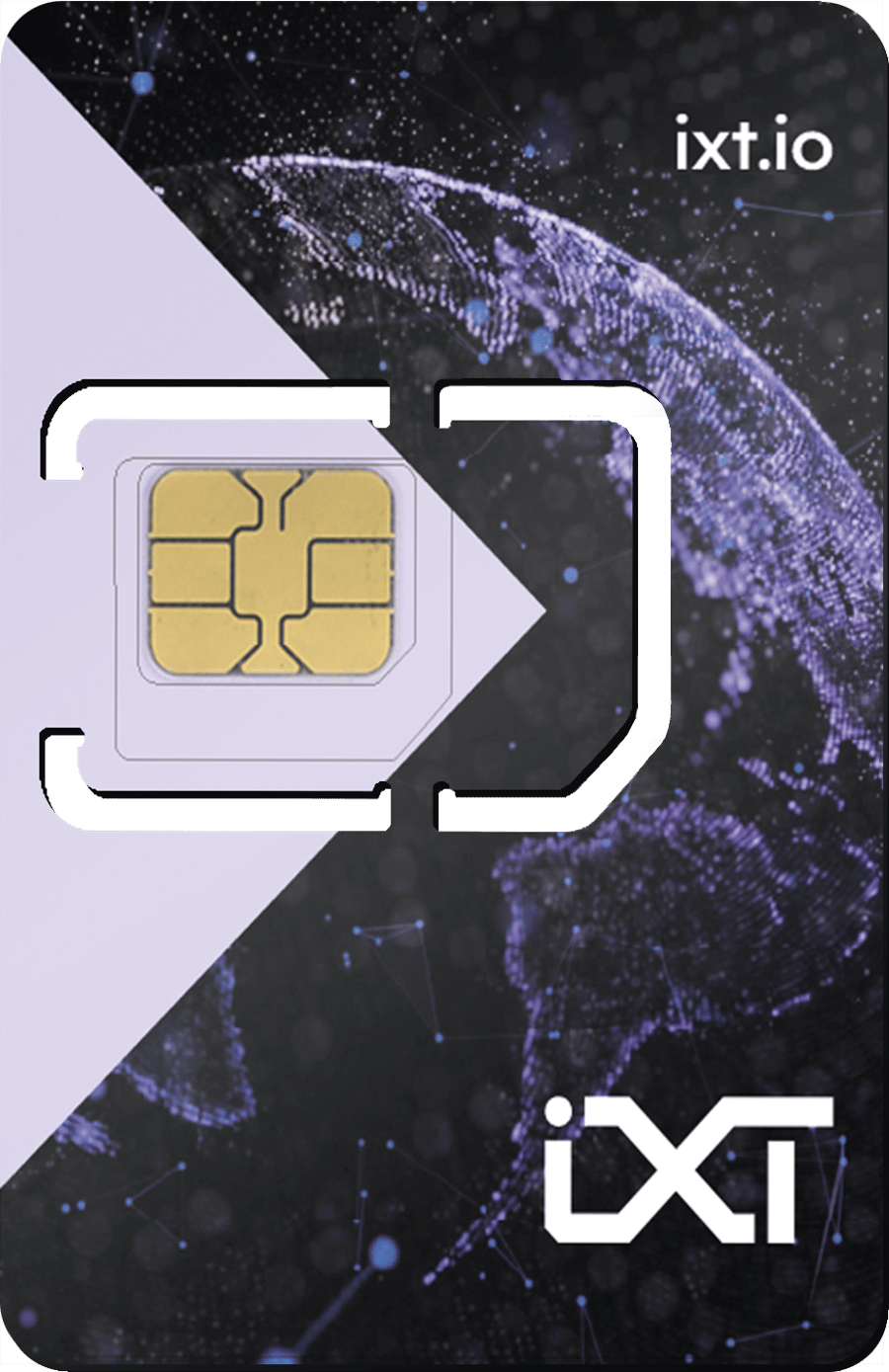
IXT Global Data Pool
IoT SIM Cost Control
Every IoT SIM card you deploy with a fixed data cap is a small bet on how much a device will use. Get the bet wrong and you pay overage on the busy SIMs while data sits stranded on the quiet ones. Across a fleet of hundreds or thousands of devices, those wrong guesses become unpredictable bills and devices dropping offline at the worst moment.
The IXT Global Data Pool removes the guesswork. Your whole fleet draws from one shared allowance, usage balances itself, and you pay for what the fleet needs instead of every worst case at once.

Why use a shared data pool?

Predictable monthly cost
One shared pool means one number on the invoice. No per-device overage fees. No budget swings when a SIM runs hot for a month. Your finance team gets a figure they trust for forecasting.

True global pooling
A single allowance covers all 190+ countries. No separate pool per region or carrier, no multi-pool admin. One contract, one allowance, everywhere your devices operate.

Grow without friction
Add or remove SIMs without contract changes or plan restructuring. The pool grows with your deployment, which suits fleets with usage spread unevenly across regions and seasons.

What is a global IoT SIM?
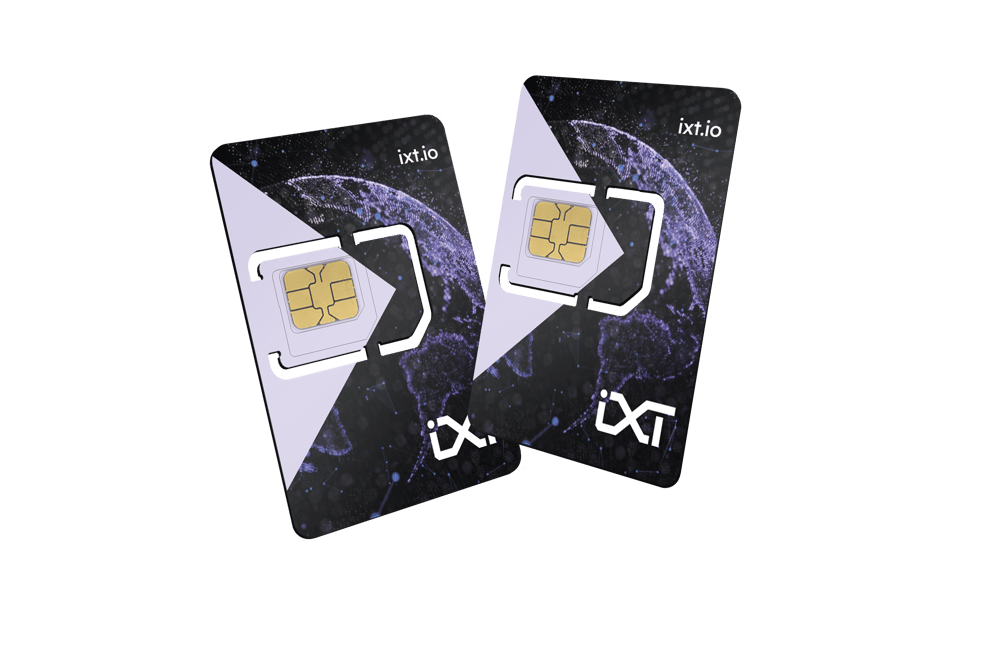
Standfirst: A global IoT SIM is one SIM card connecting a device to many mobile networks across countries, instead of being locked to a single operator.
A global IoT SIM uses multi-IMSI technology to authenticate onto whichever network gives the strongest local signal, then switches as the device moves. One SIM, one contract, coverage in 190+ countries.IXT SIMs arrive pre-activated and ready to connect, and they activate on first use, so stock sitting in a warehouse costs you nothing. You pause, unpause, and move SIMs without lock-in. For a global fleet, this replaces a stack of local carrier agreements with a single relationship.
.png?width=1000&name=Untitled%20design%20(39).png)
How do IoT SIM cards work?
Standfirst: An IoT SIM authenticates a device onto a mobile network, then routes its data through the operator's core network to the internet or a private endpoint.
The SIM holds the credentials a network uses to verify a device and grant access. Once connected, traffic travels through the operator's core network, where routing and policy decide where the data goes and how it is secured. With most providers, the core belongs to a third party, so troubleshooting and policy changes wait on someone else.
IXT owns and operates its own greenfield IoT core. Routing, policies, and diagnostics are handled directly, with no third-party carrier in the path. IoT SIMs come in several form factors to match the hardware, from removable cards to soldered chips built into the device.
IoT SIM vs eSIM vs iSIM: what is the difference?
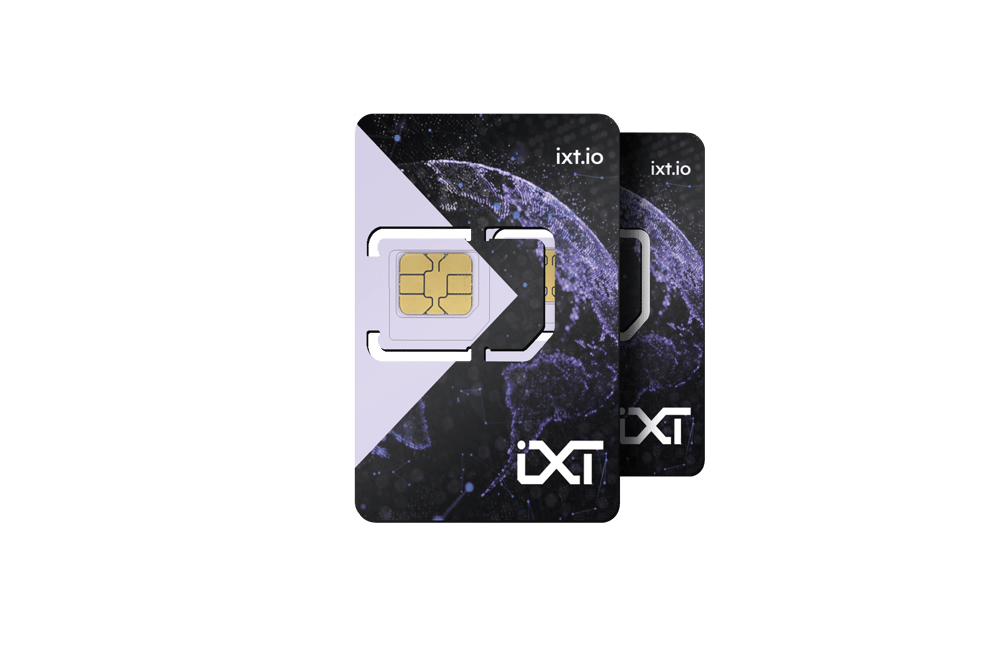
A traditional SIM is a removable chip, an eSIM is a reprogrammable SIM you update remotely, and an iSIM builds the SIM function into the device's main processor.
A traditional SIM is the physical card you slot in and swap by hand, in 2FF, 3FF or 4FF sizes. An eSIM (MFF2) is usually soldered onto the board and reprogrammed over the air, so you change operator profiles without touching the hardware. An iSIM goes a step further and integrates the SIM into the device's system-on-chip, which saves space and power in small or sealed devices. IXT supports all of these: 2FF, 3FF, 4FF, MFF2 (eSIM) and iSIM-compatible hardware, with eUICC for remote profile switching. The form factor changes how the SIM sits in the device. It does not change how the data pool works. Every SIM, whatever its shape, draws from the same shared allowance.
.png?width=1000&name=NEW%20%20of%20Blog%20images_template%20(4).png)
What is a global data pool for IoT SIMs?
A global data pool combines the data allowance of every SIM in a fleet into one shared bucket, used across countries from a single contract.
Instead of assigning a fixed cap to each SIM, you size one pool for the whole fleet. A device using less leaves headroom for a device using more, and the pool absorbs the variation automatically. No SIM hits a cap, because the per-device cap no longer exists. You monitor one number rather than thousands. The IXT Global Data Pool works across all 190+ countries from a single allowance, with no regional restrictions and no separate pool to manage per market. Pool tiers range from 1 MB to 5 GB average per SIM, with custom sizing for larger deployments.
How do you manage IoT SIMs at volume?
You manage a large SIM fleet from one dashboard showing usage, location and status in real time, with bulk actions and alerts.
The IXT Connectivity Management Platform handles fleets of thousands from a single view. Search by ICCID, add labels, filter and sort, and suspend or resume SIMs in a few clicks. Set automatic alerts across 30+ scenarios, including usage thresholds and IMEI changes, so a problem reaches you before a device goes dark. Role-based access control keeps the right permissions with the right people, and a full audit trail records every action. A REST API connects the same data and controls to your own systems. Because IXT runs its own core network, the usage counters reflect real consumption as it happens, not a delayed report.

Global connectivity
Your data pool works across multiple carriers and networks worldwide. One contract covers all regions. No need for local agreements, separate carrier relationships, or per-country data plans.

Automatic data balancing
When one device consumes less data, others draw more from the same pool. No data sits locked to an underused SIM while another device hits its cap. Your fleet shares resources efficiently instead of each device operating in isolation.

Real-time usage insight
Track data consumption per SIM and across the entire pool in IXT CMP. Set alerts when usage thresholds are reached. Identify consumption patterns and adjust before issues arise.

Cost-effective optimization
Pay for the data your fleet needs, not the sum of individual worst-case scenarios. Pool sizing based on average usage per SIM means you stop over provisioning individual plans. Tiers range from 1 MB to 5 GB average per SIM, with custom options for larger deployments.
Who is IXT Global Data Pool for?
IXT Global Data Pool serves industries where reliable, scalable connectivity drives operations. Shared data access keeps costs predictable and devices online, regardless of where they operate.


Industrial automation
Monitor equipment and production lines across sites from one shared allowance. No device drops offline on a reached cap while data sits idle on another

Security systems
Keep access control and video systems online with consistent data. Real-time alerts depend on connectivity staying up, not on an arbitrary per-device limit.

Tracking and logistics
Track assets and shipments as they cross borders. Pooled data means no tracker loses connectivity on a reached cap while allowance sits unused elsewhere in the fleet.
Telematics & fleet management
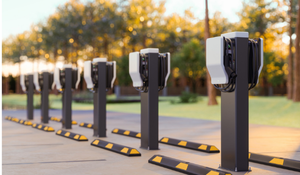
Keep stations connected for payment processing, load balancing and remote diagnostics. A failed transaction on a data cap is a failed customer experience.